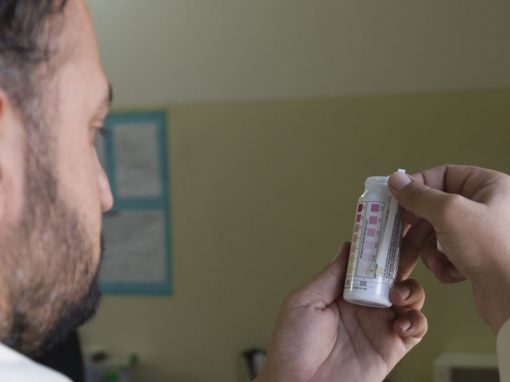
Integrated Regional Support Programme (IRSP) is a non-governmental, on-profit, national, humanitarian organization. Currently we are implementing Concern worldwide through European Commission’s supported Post Flood Wash Rehabilitation Project in Madian District Swat, KPK. IRSP invites sealed tenders from registered suppliers for the supply of Hygiene Kits at its Madian office District Swat.
Freshwater Action Network (FAN) and End Water Poverty (EWP) Global Advocacy Meeting at Hertfordshire, UK
Fresh water network (FAN) and End Water Poverty (EWP) Global Advocacy Meeting for the development of advocacy action plan linking local and global processes that impact on people’s access to water and sanitation is underway at Welwyn Garden city Hertfordshire, UK. Fresh water network (FAN) and End Water Poverty (EWP) Global Advocacy Meeting for [...]
South Asians call for equitable sanitation programmes
COLOMBO: Civil society members at an international consultative meeting, just ahead of the fourth South Asian Conference, on Sanitation (SACOSAN), in Sri Lanka, called upon their respective governments to hammer out viably equitable and inclusive sanitation and hygiene programmes.
IRSP Participating in SACOSAN IV Colombo Sri lanka
SANITATION; a means to enhance quality of life: The South Asian Conference on Sanitation (SACOSAN), a government led biennial convention usually take place on rotational basis in each country, provides platform for dialogue and influence created by the governments of South Asian Countries to revisit the progress made by them in the area of Sanitation. [...]
World Water Day Event 2011
Water is a basic requirement for all life. In 1992, the UN General Assembly designated 22 March of each year as the world day for water. Integrated Regional Support Program (IRSP) is celebrating this day each year with the participation of different government and non government organizations and local communities. This year IRSP celebrated the [...]
EC Project Launching ceremony
IRSP Pakistan in collaboration with European Union and Water Aid has launched a 3 years program entitled “Promoting Civil Society participation in water and sanitation governance in Pakistan”. The objective of the project is to “Contribute to Poverty Reduction in Pakistan through the Achievement of the Water and Sanitation Millennium Development Goals (MDGs)”. While implementing [...]
PCSPWGP Gallery
Promoting Civil Society Participation in WASH Governance in Pakistan, activities, seminars and workshops.
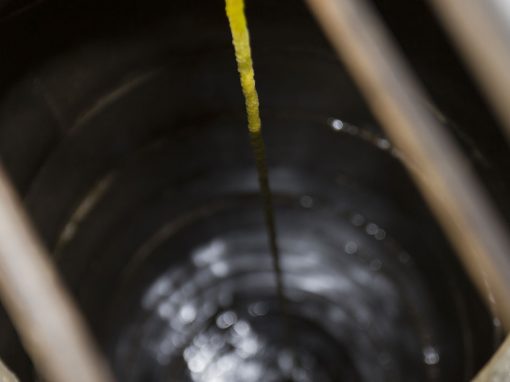
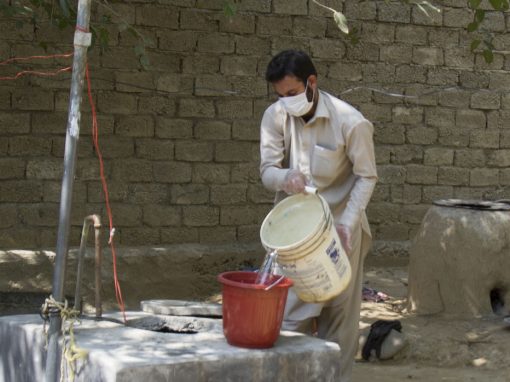
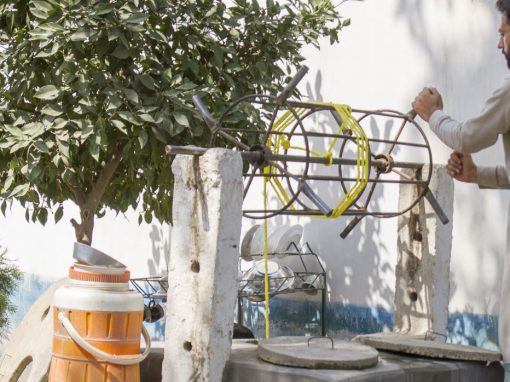
Wells Cleaning and Disinfection after flood 2010
Flood 2010 was one of the most terrible disasters in the history of Pakistan. It all began in July 2010 following heavy monsoon rains in the Khyber Pakhtunkhwa, Sindh, Punjab and Baluchistan regions of Pakistan. The estimations indicated that over two thousand people have died and over a million homes have been destroyed. The United Nations estimates that more than twenty million people are injured or homeless as a result of the flooding exceeding the combined total of individuals affected by the 2004 Indian Ocean tsunami, the 2005 Kashmir earthquake and the 2010 Haiti earthquake. However, the death count in each of those 3 disasters was significantly higher than the number of people killed in this flood. At one point, approximately one-fifth of Pakistan’s total land area was underwater due to the flooding.
A case study of Community Based Hygiene Promoter
Twenty two years old Azra d/o Raneez Khan from Shiekhan village, UC Toru, District Mardan has been working voluntarily with IRSP as a hygiene promoter in project funded by EU for last one
year. She attended hygiene promoters’ training and through her efforts she proved herself as one of the most active individuals in her community. She has studied till class 8 and now stays at home.
Hygiene promoters training 9, june 2011
In start she was not permitted by her brothers to work with a non governmental organization but later on she convinced her family. She told that attitude of social organizers mobilzed me and my family gradually,
Key Highlights of EU Project
Khyber Pakhtunkhwa is bordering with Afghanistan wherein for the last two decades war is continued. The provincial government has to face many incidents of terrorism which has slowed the social and economic development activities in the province. In June 2011 under the 18th constitutional amendment some of the ministries (including water and sanitation) were transferred to provinces, which is seen as a major shift in the governance of the country and the province. The issue of local governance and its political implications remained mired as there was no consensus on conducting elections at the provincial level and the LG system is being run through bureaucracy. The LG system is almost dysfunctional at district and TMAs levels. With all these realities, during the last eleven months project progress against the objectives remained on track and most of the targets were achieved. The district government has notified the District Wash Forum and nominated EDO Finance as focal point for coordination. 14 CSOs network is now functional which have developed their five years organisation development plans. Two CSOs have obtained independent funds and have started WASH specific projects. At the community level, about 11,019 users have got access to safe drinking water after construction of 10 new boreholes, rehabilitation of two dysfunctional schemes and disinfection of contaminated water sources. Community Led Total Sanitation (CLTS) has been triggered in all target communities to stop the open defecation practices. Construction of 40 demo latrines and 3 communal and 10 school latrines has been completed. To ensure the sustainability of the interventions 20 WATSAN and 10 Women committees have been formed in the targeted communities. 110 Hygiene volunteers have been trained, 10 school clubs have been established and various IEC materials have been developed to promote hygiene education in the targeted communities. Project newsletters have been published on quarterly basis During the reported period three research studies were also completed. IRSP is also an active member of the committee which is drafting the provincial water and sanitation strategies.